The interview I haven't given yet…
In a couple of weeks I'm going back on the BuildHer Collective podcast. It'll be my third time on. The first two, I came on as a DevelopHer, I talked about a project, what we did to it, what it sold for. This time is different, and I've been writing down my answers beforehand, which is not something I've ever done. Then I thought: why keep them in a Notes app. So here they are. The whole thing. Who I am, what I've built, and why there are now two halves to this business instead of one.
What's changed
I've started a design studio. (FTLO Design - Studio)
It came out of something I kept noticing on my own sites. I'd be standing in a house I'd just bought, making decisions worth tens of thousands of dollars in about forty seconds because I've done it enough times to know.
Then I'd talk to friends who'd been thinking about renovating for two years and hadn't moved an inch.
Same houses. Same suburbs. Same problems.
The difference wasn't money. It was that nobody had ever told them what their house could be.
The job nobody gets paid to do
There's a job in every renovation that nobody in the industry is paid to do.
An architect starts after you've decided. A draftsman draws what you tell them to draw they're not going to say your layout doesn't work. And a builder can't give you a real number for something that doesn't exist yet.
So the one decision that costs the most, what should this house actually become, falls to the homeowner.
Who is the only person in the chain without the training to make it.
That's the gap. That's the whole business.
Why me
Because I've spent five years being wrong with my own money.
Five projects. Every weekend on site. I've had walls fall over we cleaned the bricks and used them for the garage. I've put a pool in that was a very costly exercise to learn during a build. I don't regret it. But it was costly.
Ten years in architecture practices taught me how to design. The developments taught me what it costs when you get it wrong.
Most people advising you on a renovation have only done one of those two things.
And I'm deliberately not an architect. I'm a design consultant. That's a choice, not a limitation. It means I can do this in a week for $899 instead of six months for $30,000 and it means you get direction instead of documentation, which is what you actually need at that point.
The two arms, and why they're separate
This is the part I've never properly explained, so here it is.
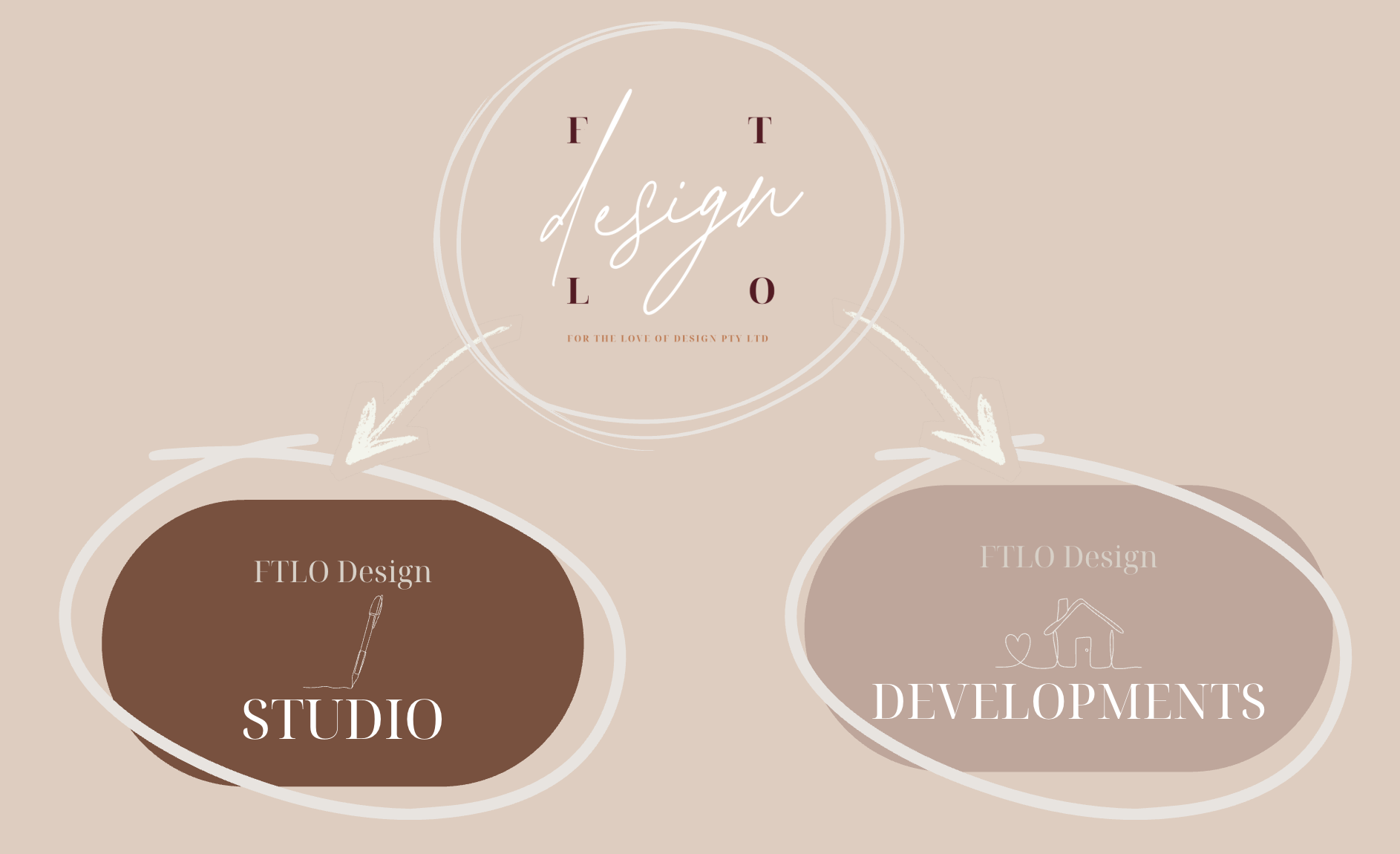
FTLO Design Developments is my own work. Houses I buy, design, build and sell. Right now that's Ryans Road in Eltham North, which I'm documenting from the ground up every decision, every number, as it happens. Not a polished campaign at the end. The build itself, including the parts that go sideways.
FTLO Design Studio is the client side. It's the same thinking, applied to your house instead of mine.
People sometimes ask why I keep doing both. The honest answer is that one doesn't work without the other.
The developments are where I learn what things actually cost. Not what a cost guide says. What it costs when the brickwork moves on day ten and you're standing there with a decision to make. Everything I tell a client is priced in something I've already paid for.
And the studio is what makes the developments a choice instead of a necessity. That matters more than it sounds. When development is your only income, you take the project because the numbers work. When it isn't, you take the project because it's interesting.
That's the whole structure. One arm funds the freedom. The other arm earns the credibility.
Who this is for
Someone who's been talking about renovating for a couple of years and still hasn't done anything.
They're not stuck because they don't know what they want. They're stuck because nobody has shown them what's possible with their specific house. They've saved four hundred images that don't fit their block. They've had the same conversation with their partner five times and it ends in the same place every time.
And there's a quieter thing underneath, which most people won't say out loud.
They're scared of feeling stupid. Of not being able to read a drawing. Of asking the builder the wrong question in front of everyone.
That keeps people stuck longer than money does.
Seven years, and four metres
One client had been thinking about it for seven years. Seven. She'd talked to designers, she had family in the industry, and nothing had landed.
When I looked at her plan, two things.
I turned the kitchen so that standing at the bench, she could see out to the garden and watch the kids.
Then I pulled the back of the extension in by four metres.
That's the counterintuitive one. Everyone's instinct is to push out as far as they can afford. But she didn't need more internal floor space. She needed garden depth. Push the extension all the way back and you get a bigger room staring at a fence.
The four metres she didn't build became the most valuable part of the renovation.
She said she'd never have landed on that in a hundred years. And she said something else that stuck with me that it still felt like hers.
That's the whole thing. I'm not there to override anyone's taste. I'm there to make the decision visible.
The mistake I see most
Paying for drawings before you know what you're building.
People spend fifty, eighty grand on architectural drawings, get a year down the track, and find out they can't afford to build it. That's not a rare story. I hear it constantly. A client put it to me almost exactly like that the industry is a bit broken.
The other one is calling a builder first. Getting a quote before you have a design is like asking someone to price a meal before you've decided what you're cooking. You'll get a number. It won't mean anything. And then you'll make decisions based on it.
And honestly sometimes I tell people not to renovate or extend. Sometimes the most valuable thing I can say is that this house is never going to give you what you need, and you should sell. Or not to build an extension because what you brief is telling me is COMPLETELY different to what a previous designer had designed.
That conversation saves someone two hundred grand.
Why I send a video
I don't send drawings people can't read.
An email explaining a floor plan takes me an hour to write and it still doesn't land. A ten-minute video where I'm walking through it you see the reasoning, you hear where I hesitated, you can watch it as many times as you want.
Deirdre watched hers with her husband after the kids had gone to bed. Monique watched it with her girl friends over a glass of wine.
That's the moment the decision gets made. Not in my inbox. On their couch.
What it's actually for
It's just me. And it's meant to be.
That's not a stepping stone to something bigger it's the design. I want the studio running alongside the developments, not instead of them.
What I learn on my own site goes straight into the next client's plan. What a bathroom actually costs this year, not what a cost guide says. What happens when the brickwork moves on day ten. Which decisions you can reverse and which ones you're stuck with. Separate the two halves and both of them get weaker.
But it only works if I can turn the tap on and off.
When a development is mid-build, I need to take fewer clients. When it's quiet, I can take more. That's not me being precious about my time it's the only way both things get done properly.
So the studio is built lean on purpose. Fixed fee, fixed scope, four places a month. I over-communicate at every stage and everything sits in the client's portal from the start, the plans, the notes, the videos; so nobody's chasing me for a drawing they can't find, and nobody's waiting on me to answer a question I should have answered already.
One touch. Everything findable. Nothing sitting in an inbox.
That's what lets one person run two businesses without either of them slipping.
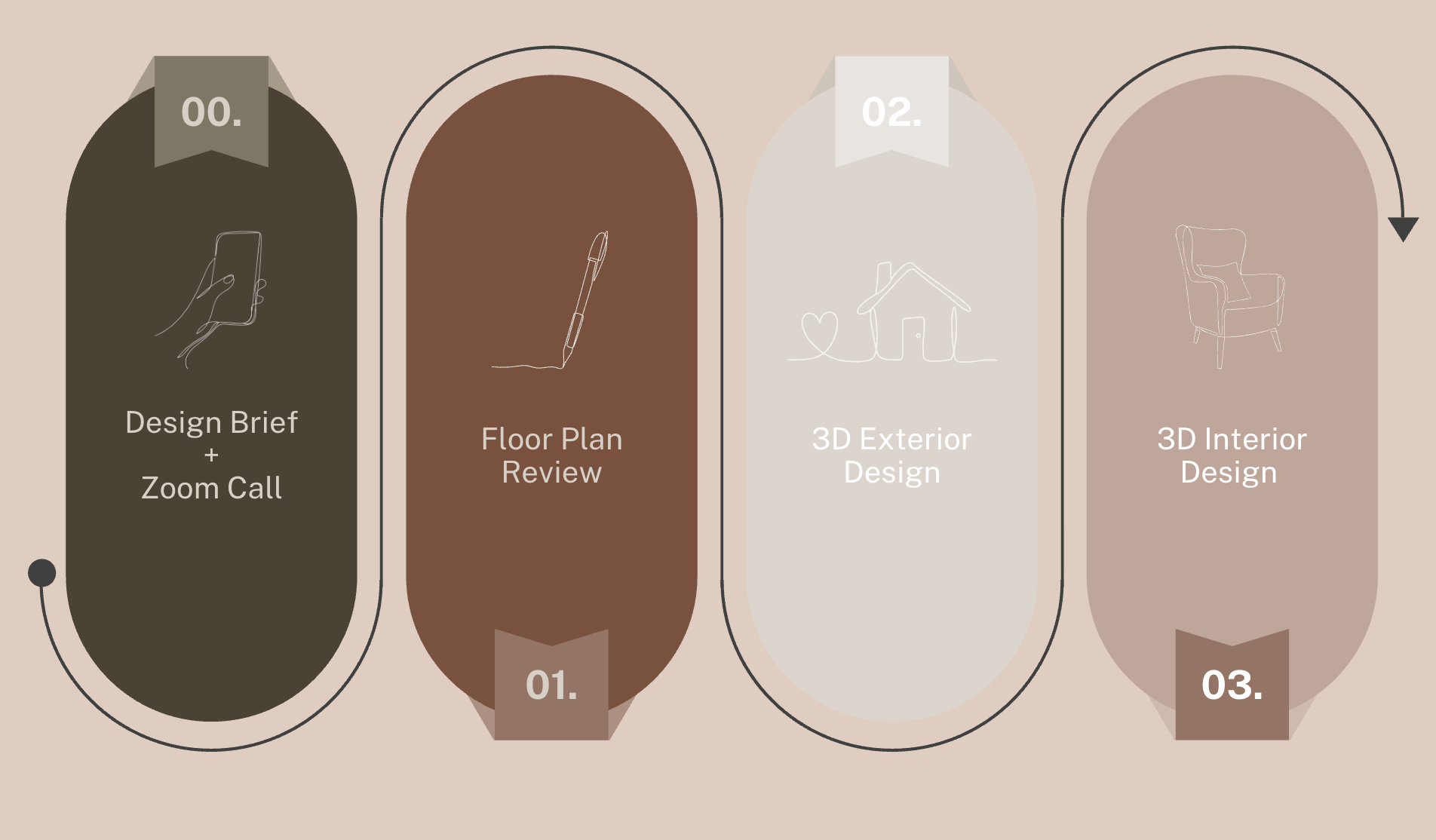
If you're somewhere in the stuck phase you know the house isn't working, but you can't see what to do with it; the Floor Plan Review is where that starts. A Zoom, then two scaled floor plan options for your house: one is your ideas drawn up properly so you can finally see them, one is mine. Structural notes. And a recorded walkthrough of every decision, including what I'd cut first if the budget got tight.
$899 + GST.
Seven business days from your Zoom.
Four places a month, because that's what I can do properly.
Enquire at fortheloveofdesign.com.au or email hello@fortheloveofdesign.com.au
